The Woman Warrior: A Comprehensive Exploration of Maxine Hong Kingston’s Masterpiece
Exploring “The Woman Warrior” reveals a powerful narrative accessible through various digital formats‚ including a readily available PDF version. IIIF enhances research‚ offering rich metadata and comparative viewing options within cultural heritage collections.
Maxine Hong Kingston’s The Woman Warrior: Memoirs of a Girlhood Among Ghosts‚ published in 1976‚ stands as a landmark achievement in Asian American literature and autobiographical writing. This groundbreaking work transcends simple memoir‚ weaving together personal experiences‚ family histories‚ Chinese myths‚ and folklore into a complex tapestry exploring identity‚ cultural displacement‚ and the challenges faced by Chinese Americans.
The narrative centers on Kingston’s attempt to understand her heritage and her place within both American and Chinese cultures. It’s a deeply personal exploration of her mother’s silence‚ the pressures of assimilation‚ and the search for a voice in a society that often marginalizes those who don’t conform. Readers can readily access this pivotal text‚ with a widely circulated PDF version available for study and analysis.
Furthermore‚ resources like the International Image Interoperability Framework (IIIF) are invaluable for researchers. IIIF provides enhanced metadata and media viewing capabilities‚ allowing for detailed comparison of the work within broader cultural contexts. The accessibility of the PDF‚ coupled with tools like IIIF‚ facilitates a deeper understanding of Kingston’s masterpiece and its enduring legacy.
II. Historical and Cultural Context
Understanding The Woman Warrior requires acknowledging the socio-political climate surrounding Chinese immigration to the United States. The late 19th and early 20th centuries were marked by significant anti-Chinese sentiment‚ culminating in discriminatory legislation like the Chinese Exclusion Act. This historical backdrop profoundly shaped the experiences of Kingston’s parents and‚ consequently‚ her own upbringing.
The cultural context is equally crucial. Traditional Chinese beliefs‚ folklore‚ and the weight of ancestral expectations clash with the demands of American assimilation. Kingston’s work explores the tension between these worlds‚ portraying a family grappling with silence‚ shame‚ and the complexities of maintaining cultural identity in a foreign land. Accessing the text‚ often through a readily available PDF format‚ allows for focused study of these nuanced themes.
Moreover‚ digital humanities initiatives‚ such as those utilizing IIIF‚ offer researchers enhanced tools for contextualizing the work. IIIF’s rich metadata and comparative viewing options facilitate a deeper understanding of the historical and cultural forces at play‚ enriching the reading experience of the PDF version.
III. The Chinese Exclusion Act and its Impact
The Chinese Exclusion Act of 1882 stands as a pivotal‚ and deeply damaging‚ piece of legislation in understanding the context of Maxine Hong Kingston’s The Woman Warrior. This law‚ prohibiting Chinese laborers from immigrating to the US‚ created a climate of fear‚ discrimination‚ and systemic racism for Chinese communities.
The Act’s impact extended beyond immigration restrictions; it fostered social ostracism and economic hardship. Chinese Americans faced violence‚ limited opportunities‚ and were often denied basic rights. This historical trauma is subtly woven into Kingston’s narrative‚ manifesting as silence‚ internalized oppression‚ and a struggle for belonging. Studying the text‚ readily available as a PDF‚ reveals these echoes of historical injustice.
Furthermore‚ digital resources like IIIF provide valuable tools for researchers. Access to digitized primary sources‚ alongside the PDF of Kingston’s work‚ allows for a comparative analysis of the historical context and its literary representation‚ deepening our understanding of the Act’s lasting legacy.
IV. First and Second Generation Chinese-American Experiences
The Woman Warrior profoundly explores the complex experiences of first and second-generation Chinese Americans‚ navigating a fractured identity between ancestral heritage and American assimilation. The first generation often carried the weight of displacement‚ discrimination‚ and the longing for a homeland left behind‚ frequently remaining silent about their hardships.
The second generation‚ like Kingston herself‚ faced the challenge of mediating between their parents’ silence and the demands of American culture. This created internal conflicts‚ a sense of not fully belonging‚ and a struggle to define their own identities. Accessing the text as a PDF allows for close examination of these nuanced portrayals.
Digital platforms‚ such as those utilizing IIIF‚ enhance research by providing access to related historical documents and cultural artifacts. These resources‚ alongside the PDF version of Kingston’s work‚ illuminate the specific challenges and triumphs of these generations‚ fostering a deeper appreciation for their unique contributions.
V. Maxine Hong Kingston: Author Biography
Maxine Hong Kingston‚ born in 1940‚ is a celebrated Chinese-American author renowned for her groundbreaking memoir‚ The Woman Warrior. Her work masterfully blends autobiography‚ myth‚ and history to explore themes of identity‚ cultural displacement‚ and the power of storytelling. Kingston’s parents‚ Chinese immigrants‚ significantly shaped her upbringing and literary focus.
She earned a B.A. from the University of California‚ Berkeley‚ and later taught at various institutions‚ including the University of Hawaii and the University of California‚ Berkeley. Her writing often delves into the silences and unspoken narratives within her family and community.
Researchers benefit from readily available resources like a digital PDF of The Woman Warrior‚ facilitating in-depth analysis. Furthermore‚ platforms employing IIIF technology offer enriched metadata and comparative viewing options‚ aiding in understanding Kingston’s literary context and lasting influence. Accessing the text in PDF format allows for detailed study of her unique narrative style.
VI. Kingston’s Early Life and Family History
Maxine Hong Kingston’s early life‚ deeply rooted in the experiences of her immigrant parents‚ profoundly influenced her writing. Born in Stockton‚ California‚ she grew up amidst the challenges and cultural complexities faced by a second-generation Chinese-American family. Her father‚ a laundryman‚ and mother‚ a seamstress‚ carried stories of hardship and resilience from China.
These narratives‚ often fragmented and shrouded in silence‚ became central to her exploration of identity in The Woman Warrior. The family’s history‚ marked by the impacts of the Chinese Exclusion Act and societal prejudice‚ instilled in Kingston a keen awareness of cultural displacement and the struggle for belonging.
Scholars and students alike can access and analyze these foundational elements through resources like a digital PDF version of the memoir. IIIF-enabled platforms further enhance research‚ providing rich metadata and comparative analysis tools. The PDF format allows for close reading of the familial influences shaping Kingston’s perspective.
VII. Influences on Her Writing Style
Maxine Hong Kingston’s distinctive writing style is a compelling blend of autobiography‚ myth‚ and folklore‚ reflecting a deliberate attempt to grapple with her complex heritage. Her approach isn’t strictly linear; instead‚ she employs fragmentation and a non-chronological structure‚ mirroring the fractured nature of memory and cultural transmission.
The oral storytelling traditions of her family‚ combined with her academic study of literature‚ significantly shaped her narrative voice. She draws heavily on Chinese legends and historical accounts‚ weaving them into her personal experiences to create a layered and evocative text. This unique style allows her to explore themes of identity‚ gender‚ and cultural hybridity with remarkable depth.
Accessing a PDF version of The Woman Warrior facilitates detailed analysis of these stylistic choices. Furthermore‚ IIIF resources offer enhanced viewing and metadata capabilities‚ aiding researchers in understanding the interplay between Kingston’s personal history and her artistic techniques. The PDF allows for focused study of her innovative narrative form.
VIII. Key Themes in “The Woman Warrior”
“The Woman Warrior” delves into several profound themes‚ most notably the challenging process of identity formation within a bicultural context. Kingston explores the complexities of being both Chinese and American‚ navigating the tensions and contradictions inherent in a hybrid identity. Closely linked is the theme of cultural hybridity‚ examining how traditions are adapted‚ resisted‚ and transformed across generations.
The power of storytelling and mythmaking is central‚ as Kingston utilizes narratives – both personal and ancestral – to understand and shape her own experiences. Silence‚ particularly the silencing of women‚ emerges as a potent force‚ highlighting the oppression and limitations imposed by patriarchal structures.
A PDF version of the text allows for focused examination of how these themes are developed through Kingston’s unique narrative style. IIIF resources further enhance research‚ providing rich metadata and comparative viewing options. Studying the PDF reveals the intricate ways Kingston interweaves personal history with cultural myth.
IX. Identity Formation and Cultural Hybridity
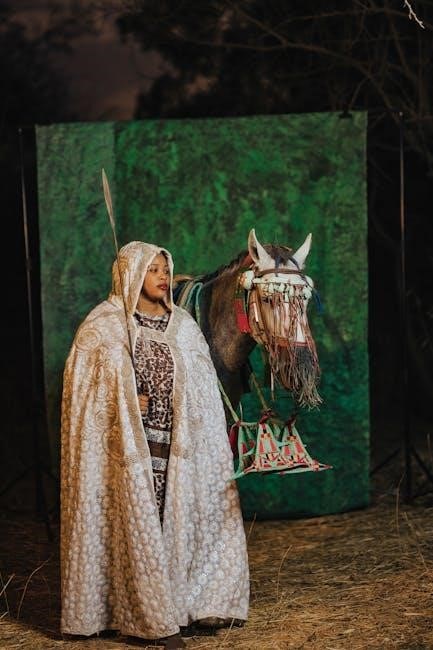
“The Woman Warrior” profoundly explores the fractured process of identity formation for Chinese-Americans‚ caught between two worlds. Kingston’s narrative demonstrates how cultural hybridity isn’t simply a blending‚ but a complex negotiation of conflicting values and expectations. The protagonist’s struggle to reconcile her Chinese heritage with her American upbringing is central to the work.
This negotiation is often fraught with silence and miscommunication‚ particularly regarding the experiences of her mother and the “No Name Woman.” Accessing a PDF version of the text allows for close reading of passages detailing these internal conflicts. IIIF’s metadata capabilities further aid in understanding the cultural context informing Kingston’s identity exploration.
The PDF format facilitates detailed analysis of how Kingston constructs a self through storytelling‚ myth‚ and the re-imagining of ancestral narratives. Ultimately‚ the work suggests that identity is not fixed‚ but fluid and constantly evolving through interaction with both cultures.
X. The Power of Storytelling and Mythmaking
“The Woman Warrior” powerfully demonstrates how storytelling isn’t merely recounting events‚ but a vital act of creation and self-definition. Kingston utilizes myth‚ legend‚ and folklore – both Chinese and American – to navigate trauma and construct meaning. These narratives become tools for understanding and reshaping her family’s history and her own identity.
The accessibility of a PDF version of the text allows readers to closely examine Kingston’s intricate weaving of fact and fiction. IIIF’s rich metadata enhances the ability to compare and contrast the cultural origins of the myths employed. The stories aren’t presented as objective truths‚ but as subjective interpretations shaped by personal experience;
Through mythmaking‚ Kingston empowers herself and her silenced ancestors‚ giving voice to experiences that were previously suppressed. Analyzing the PDF reveals how these narratives function as a form of resistance and a means of reclaiming agency. The power lies in the telling‚ and the retelling‚ of these stories.
XI. Analysis of Major Sections

A detailed examination of “The Woman Warrior’s” key sections – “No Name Woman‚” “White Tigers‚” “Shaman‚” and “Four Directions” – reveals Kingston’s masterful use of fragmented narrative and shifting perspectives. Each section explores different facets of identity‚ trauma‚ and the search for self-understanding.
Accessing the text via a PDF format facilitates close reading and annotation‚ allowing for a deeper engagement with Kingston’s complex prose. IIIF’s capabilities further enhance this analysis‚ enabling comparative study of the cultural contexts informing each section. “No Name Woman” confronts the silencing of female ancestors‚ while “White Tigers” embodies the warrior archetype.
“Shaman” explores the bridging of cultural gaps‚ and “Four Directions” signifies a journey towards self-acceptance. The PDF allows for easy navigation between these sections‚ highlighting the interconnectedness of Kingston’s themes. Analyzing these sections collectively demonstrates the power of storytelling to heal and transform.
XII. “No Name Woman”: Silence and Female Oppression
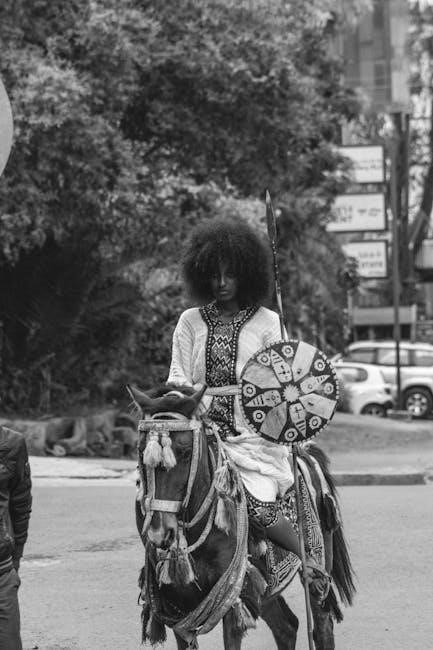
“No Name Woman” powerfully illustrates the devastating consequences of societal silence and the oppression of women within a patriarchal Chinese-American context; Kingston’s aunt’s story‚ deliberately obscured and whispered about‚ embodies the shame imposed upon those who transgressed traditional norms.
A PDF version of “The Woman Warrior” allows for focused study of this section‚ enabling readers to trace the intricate layers of Kingston’s narrative and the deliberate withholding of information. The digital format facilitates annotation and close reading of the language used to depict the aunt’s fate.
IIIF’s metadata capabilities can contextualize the historical and cultural forces that contributed to this silencing. Kingston’s exploration of her aunt’s story is not merely a recounting of past events‚ but a reclamation of a silenced voice. The PDF format aids in understanding the weight of unspoken narratives and the enduring impact of female oppression.
XIII. “White Tigers”: The Warrior Woman Archetype
“White Tigers” presents a complex exploration of the warrior woman archetype‚ drawing upon Chinese folklore and Kingston’s own imaginative reconstruction of her family history. The section centers on the story of Fa Mu Lan‚ a legendary female warrior‚ and intertwines it with the experiences of Kingston’s brother.
Accessing a PDF copy of “The Woman Warrior” allows for detailed examination of Kingston’s stylistic choices in this section‚ particularly her blending of myth‚ legend‚ and personal narrative. The digital format enables readers to easily navigate between the historical context and the fantastical elements.
IIIF’s media viewing options can facilitate comparative analysis of different depictions of warrior women across cultural heritage collections. Kingston’s reimagining of Fa Mu Lan challenges traditional notions of heroism and femininity. Studying the PDF reveals how Kingston uses storytelling to empower herself and explore the possibilities of female agency within a restrictive societal framework.
XIV. “Shaman”: Bridging the Gap Between Worlds

“Shaman” delves into the realm of the supernatural‚ focusing on Kingston’s aunt‚ Brave Orchid‚ and her experiences as a healer in China. This section explores the power of traditional Chinese medicine and the role of the shaman in mediating between the human and spirit worlds.
A readily available PDF version of “The Woman Warrior” is invaluable for studying the intricate details of this section. Readers can closely examine Kingston’s use of vivid imagery and metaphorical language to convey the complexities of Brave Orchid’s practice. IIIF’s rich metadata enhances understanding of the cultural context surrounding shamanism.
The digital format allows for easy annotation and comparison of different interpretations of the shamanic traditions presented in the text. Kingston’s exploration of her aunt’s experiences serves as a metaphor for her own journey of self-discovery and her attempt to bridge the gap between her Chinese heritage and her American identity. Accessing the PDF facilitates a deeper appreciation of this nuanced exploration.
XV. “Four Directions”: Finding Voice and Self-Acceptance
“Four Directions” represents a culmination of Kingston’s journey toward self-understanding and acceptance. This section sees the author grappling with her identity as a Chinese-American woman and finding her voice through storytelling. It’s a powerful exploration of reclaiming narrative control.
A digital PDF copy of “The Woman Warrior” is essential for detailed analysis of this concluding section. Readers can easily revisit key passages and trace the development of Kingston’s voice throughout the memoir. IIIF’s media viewing options allow for comparative study of cultural representations influencing her self-perception.
The accessibility of the PDF format encourages close reading and annotation‚ revealing the subtle nuances of Kingston’s prose. “Four Directions” signifies a move from silence and oppression to empowerment and self-expression. The ability to digitally explore the text enhances understanding of how Kingston integrates myth‚ history‚ and personal experience to forge a unique identity and ultimately‚ find peace.
XVI. Literary Techniques and Style
Kingston’s innovative style in “The Woman Warrior” blends autobiography‚ myth‚ and folklore‚ creating a unique and compelling narrative. Her use of fragmented storytelling and non-linear timelines mirrors the complexities of memory and cultural identity. Accessing a digital PDF version of the text is crucial for dissecting these techniques.
The PDF format allows for detailed annotation and close reading‚ highlighting Kingston’s masterful weaving of Chinese legends with personal experiences. IIIF’s rich metadata features can aid in understanding the cultural context of these myths and their impact on her writing.
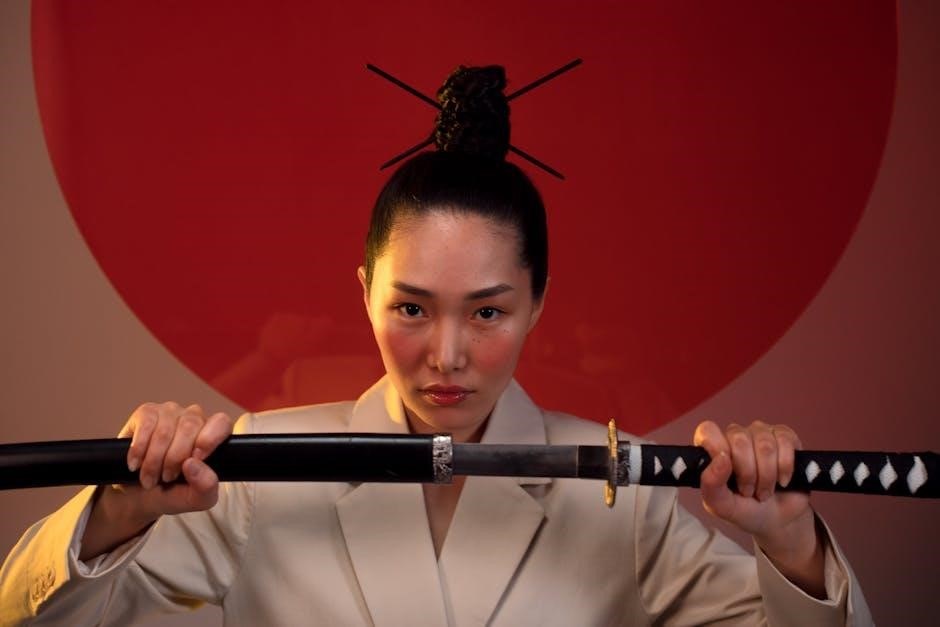
Analyzing the text through a PDF facilitates examination of her poetic prose and symbolic imagery. Kingston’s deliberate disruption of traditional narrative structures challenges conventional storytelling. The digital format enables researchers to easily compare passages and identify recurring motifs‚ revealing the depth and artistry of her literary approach. It’s a powerful example of how form and content intertwine.

XVII. Use of Myth‚ Legend‚ and Folklore
“The Woman Warrior” profoundly integrates Chinese myths‚ legends‚ and folklore‚ not as mere decoration‚ but as integral components of the narrative. These elements‚ readily accessible for study within a digital PDF version‚ illuminate the protagonist’s struggle with identity and cultural heritage. IIIF’s capabilities enhance the exploration of these interwoven stories.
The PDF format allows for side-by-side comparison of Kingston’s interpretations with original sources‚ revealing her creative adaptations. Stories like those of Mulan and the Eight Immortals are re-imagined‚ reflecting the complexities of the Chinese-American experience.
Analyzing the text via PDF reveals how folklore serves as a means of both empowerment and constraint for the female characters. Kingston utilizes these traditional narratives to explore themes of silence‚ oppression‚ and the search for voice. The digital format facilitates detailed annotation and a deeper understanding of the cultural significance embedded within each myth‚ legend‚ and folktale.
XVIII. Fragmentation and Non-Linear Narrative
“The Woman Warrior” deliberately employs a fragmented and non-linear narrative structure‚ mirroring the fractured experience of cultural displacement and the challenges of constructing identity. Accessing the work through a digital PDF allows readers to navigate this complexity with ease‚ revisiting sections and tracing thematic connections.
The PDF format supports close reading and annotation‚ crucial for understanding how Kingston interweaves personal memoir‚ family history‚ myth‚ and legend. This deliberate disruption of chronological order reflects the protagonist’s struggle to reconcile conflicting narratives and forge a cohesive sense of self. IIIF’s features further aid in comparative analysis.
The non-linear approach‚ readily apparent in the PDF version‚ isn’t chaotic but rather a strategic choice. It emphasizes the subjective nature of memory and the power of storytelling to shape reality. Kingston’s technique invites readers to actively participate in constructing meaning‚ piecing together fragments to form a holistic understanding of the Chinese-American experience.
XIX. Critical Reception and Legacy

“The Woman Warrior” initially sparked considerable debate upon its 1976 publication‚ receiving both praise and criticism. The readily available PDF version has facilitated continued scholarly engagement‚ allowing for wider accessibility and deeper analysis of Kingston’s groundbreaking work. Early reviews often focused on the blurring of fact and fiction‚ questioning the autobiographical nature of the narrative.
However‚ the book quickly gained recognition for its innovative style and powerful exploration of identity‚ gender‚ and cultural conflict. The PDF format allows researchers to easily quote and cite passages‚ contributing to a robust body of critical literature. IIIF’s metadata capabilities enhance this research process.
Today‚ “The Woman Warrior” is considered a cornerstone of Asian American literature and a significant contribution to feminist thought. Its legacy lies in its ability to give voice to marginalized experiences and challenge conventional notions of selfhood. The enduring popularity of the PDF demonstrates its continued relevance for contemporary readers.
XX. “The Woman Warrior” in Contemporary Discourse & PDF Availability

“The Woman Warrior” continues to resonate in contemporary discussions surrounding identity‚ immigration‚ and the complexities of the Asian American experience. Its themes of cultural hybridity and the search for voice remain powerfully relevant in today’s increasingly globalized world. The widespread PDF availability has undeniably fueled this ongoing engagement‚ making Kingston’s work accessible to a broader audience;

Scholarly articles‚ book clubs‚ and classroom curricula frequently utilize the PDF version for study and debate. IIIF’s rich metadata and media viewing options further enhance the analytical possibilities for researchers. Discussions often center on the ethics of representing family history and the challenges of navigating multiple cultural identities.
Furthermore‚ the book’s exploration of female empowerment and the silencing of women’s voices continues to inspire feminist scholarship. The easily shareable PDF format facilitates the dissemination of ideas and encourages critical dialogue‚ solidifying “The Woman Warrior’s” lasting impact.