Retrocalcaneal Bursitis Exercises: A Comprehensive Plan
Navigating recovery from retrocalcaneal bursitis requires a structured exercise approach, often detailed in downloadable PDFs.
These guides emphasize gradual progression,
starting with gentle stretches and building towards strengthening and proprioceptive drills.
YouTube resources, like the one from July 16, 2018, can visually supplement these plans, aiding understanding and proper form.
Understanding Retrocalcaneal Bursitis
Retrocalcaneal bursitis involves inflammation of the bursa, a fluid-filled sac located between the Achilles tendon and the heel bone (calcaneus). Understanding this condition is crucial before embarking on any exercise regimen, often found detailed in comprehensive PDFs. These resources typically explain how repetitive stress, improper footwear, or tight Achilles tendons can irritate the bursa, leading to pain and limited mobility.
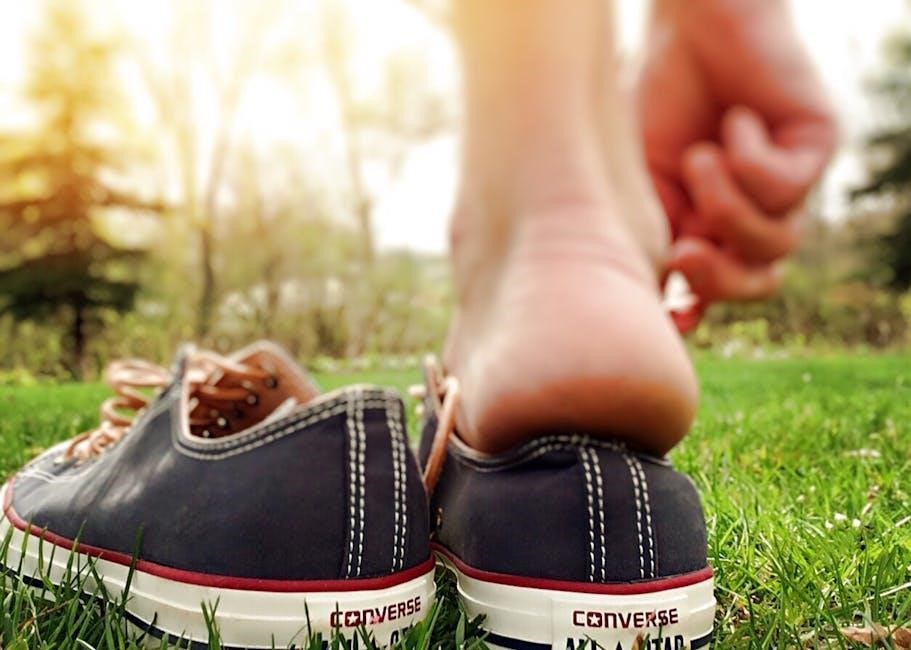
The bursa’s role is to reduce friction, allowing smooth tendon movement. When inflamed, it causes discomfort, especially during walking or running. PDFs dedicated to retrocalcaneal bursitis exercises often highlight the importance of addressing underlying biomechanical issues. Resources like YouTube videos (uploaded July 16, 2018) can visually demonstrate the anatomy and mechanics involved, complementing the written information.
Effective exercise plans, as outlined in these PDFs, aim to restore flexibility, strength, and proper movement patterns. Ignoring the root cause and jumping into exercises prematurely can exacerbate the condition. Therefore, a thorough understanding of the bursitis and its contributing factors is paramount for successful rehabilitation.
What is the Retrocalcaneal Bursa?
The retrocalcaneal bursa is a small, fluid-filled sac positioned between the Achilles tendon and the calcaneus (heel bone). PDFs detailing retrocalcaneal bursitis exercises frequently begin by explaining this anatomical structure and its function; It acts as a cushion, reducing friction as the tendon moves during ankle and foot motion. Without this bursa, the tendon would rub directly against the bone, causing pain and potentially leading to tendonitis.
Understanding its location is key to comprehending how exercises can help. Inflammation of this bursa, as addressed in exercise PDFs, disrupts this smooth movement. Visual aids, such as those found on platforms like YouTube (content from July 16, 2018), can illustrate the bursa’s precise placement and relationship to surrounding tissues.
The bursa isn’t a weight-bearing structure; its purpose is purely protective. Exercise programs outlined in these PDFs aim to alleviate pressure on the bursa and restore its normal function, allowing for pain-free movement. Recognizing its role is fundamental to appreciating the rationale behind specific exercises.
Causes of Retrocalcaneal Bursitis
Retrocalcaneal bursitis arises from repetitive friction or pressure on the bursa, often detailed within retrocalcaneal bursitis exercise PDFs. Common culprits include overuse during activities like running, jumping, or even prolonged walking; Improper footwear, particularly shoes with insufficient heel support, significantly contributes to the problem.
Tight Achilles tendons and calf muscles are frequently cited as contributing factors, as they increase strain on the bursa. Exercise PDFs emphasize stretching to address these muscular imbalances. Additionally, biomechanical issues, such as overpronation (rolling inward of the foot), can exacerbate the condition.
Sudden increases in activity level or intensity can overwhelm the bursa’s capacity to cope with stress. Resources like YouTube videos (dated July 16, 2018) can demonstrate proper form to minimize strain. Direct trauma, though less common, can also initiate inflammation. Understanding these causes is crucial for tailoring an effective exercise program, as outlined in comprehensive PDFs.
Symptoms of Retrocalcaneal Bursitis
The hallmark symptom of retrocalcaneal bursitis is pain at the back of the heel, often worsening with activity, as detailed in retrocalcaneal bursitis exercise PDFs. This pain is typically felt between the Achilles tendon and the heel bone. Individuals may experience tenderness to the touch in this area, and swelling can develop.
Stiffness in the ankle and Achilles tendon is common, particularly in the morning or after periods of rest. Exercise PDFs often include assessments to gauge range of motion. Pain may radiate upwards along the Achilles tendon, or downwards into the sole of the foot.
Difficulty walking or running, and a sensation of a “pump bump” are also frequently reported. YouTube resources (from July 16, 2018) can visually illustrate the affected area. In severe cases, the bursa may become visibly inflamed. Recognizing these symptoms is the first step towards implementing a targeted exercise plan, as prescribed in comprehensive PDFs.
Initial Management & Rest
The first phase of managing retrocalcaneal bursitis, as outlined in many retrocalcaneal bursitis exercise PDFs, centers around reducing inflammation and pain. This begins with a period of relative rest, not necessarily complete immobilization, but avoiding activities that aggravate the condition.
Reducing activity levels allows the inflamed bursa to begin healing. PDFs emphasize the importance of modifying activities rather than stopping them entirely. Initial management also includes avoiding footwear that puts pressure on the heel.
Combining rest with other conservative treatments, like ice and compression (detailed later), is crucial. YouTube videos (July 16, 2018) can demonstrate proper icing techniques. Exercise PDFs often recommend a gradual return to activity, guided by pain levels. Ignoring initial symptoms and pushing through pain can prolong recovery and potentially worsen the condition, making early, appropriate management vital.
The Role of Ice and Compression
Retrocalcaneal bursitis exercise PDFs consistently highlight the synergistic benefits of ice and compression in the initial stages of treatment. Ice application, typically for 15-20 minutes several times a day, effectively reduces inflammation and numbs pain. Proper technique, often visually demonstrated on platforms like YouTube (July 16, 2018), involves using an ice pack wrapped in a thin towel to protect the skin.
Compression, achieved through the use of an elastic bandage, helps minimize swelling and provides support to the affected area. It’s crucial to avoid wrapping too tightly, which could restrict circulation. PDFs emphasize finding a balance between support and comfort.
Combining ice and compression creates a powerful anti-inflammatory effect, complementing the rest phase. These methods are often recommended alongside activity modification, forming a cornerstone of early management. Consistent application, as detailed in downloadable exercise guides, significantly contributes to pain relief and facilitates the healing process.
Pain Medication Options
While retrocalcaneal bursitis exercise PDFs prioritize physical therapies, they often acknowledge the role of pain medication in managing discomfort. Over-the-counter nonsteroidal anti-inflammatory drugs (NSAIDs), like ibuprofen or naproxen, are frequently recommended for reducing pain and inflammation. These medications provide symptomatic relief, allowing for better participation in rehabilitation exercises.
PDFs typically advise consulting a healthcare professional before starting any medication regimen, especially for individuals with pre-existing conditions. In some cases, a doctor may prescribe stronger pain relievers or even corticosteroid injections directly into the bursa to provide more significant, albeit temporary, relief.
It’s important to remember that medication is generally considered an adjunct to exercise and other conservative treatments. Resources like those found on YouTube (July 16, 2018) emphasize that long-term management relies on addressing the underlying biomechanical issues through targeted exercises and preventative measures, not solely on masking the pain.
Stretching Exercises
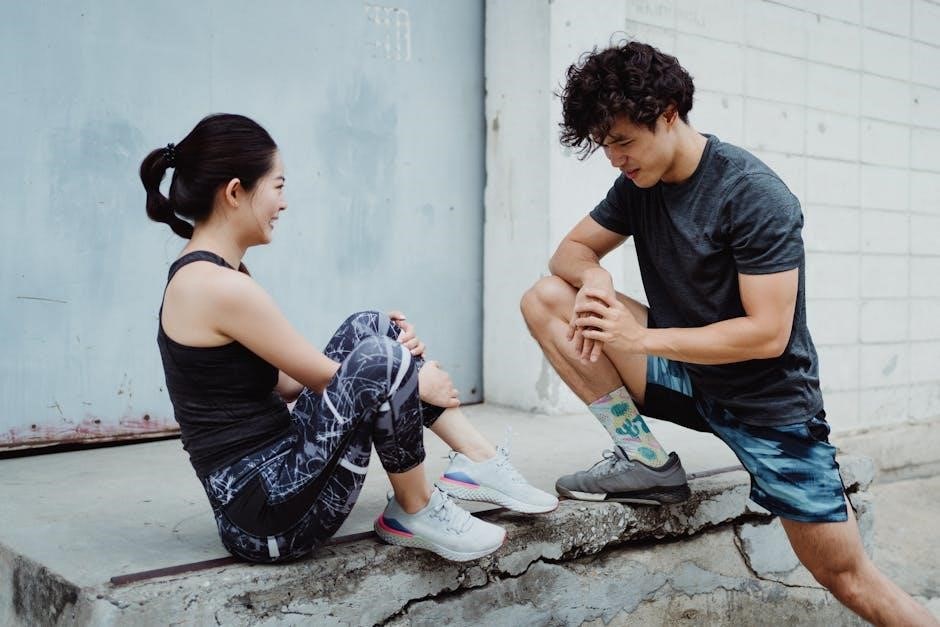
Retrocalcaneal bursitis exercise PDFs consistently highlight stretching as a foundational component of treatment. These programs emphasize improving flexibility in the calf muscles (gastrocnemius and soleus) and the plantar fascia, as tightness in these areas can exacerbate bursal irritation. Gentle, sustained stretches are preferred over ballistic movements.
PDF guides typically detail specific techniques, including wall calf stretches, towel stretches for the plantar fascia, and Achilles tendon stretches performed with a slight bend in the knee. The duration and frequency of stretches are carefully prescribed, often starting with holding each stretch for 30 seconds, repeated several times a day.
Visual aids, such as those potentially found on platforms like YouTube (referenced July 16, 2018), can be invaluable for ensuring correct form. Proper technique minimizes the risk of further injury and maximizes the effectiveness of the stretches in reducing pain and restoring range of motion.
Calf Stretching (Gastrocnemius & Soleus)
Retrocalcaneal bursitis exercise PDFs dedicate significant attention to calf stretching, differentiating between the gastrocnemius and soleus muscles due to their varying roles in ankle movement. Stretching both is crucial for comprehensive treatment.
Gastrocnemius stretches are typically performed with the knee extended, targeting the muscle’s upper portion. A common technique involves leaning against a wall with one leg straight back, heel firmly planted. Soleus stretches, conversely, are done with the knee bent, focusing on the lower calf muscle.
PDFs emphasize holding each stretch for 30 seconds, repeating 2-3 times, several times daily. Gentle tension should be felt, avoiding any sharp pain. Resources like YouTube (July 16, 2018) can demonstrate proper form. Consistent calf stretching reduces strain on the Achilles tendon and, consequently, the retrocalcaneal bursa, promoting healing and preventing recurrence.
Achilles Tendon Stretch
Retrocalcaneal bursitis exercise PDFs consistently highlight the importance of Achilles tendon stretching, recognizing its direct impact on bursa pressure. These stretches aim to improve tendon flexibility and reduce tension contributing to inflammation.
A primary stretch involves the “eccentric” variation, often detailed in PDF guides. This entails slowly lowering the heel off a step, controlling the movement, and then returning to the starting position; Another common stretch is a standing calf stretch, similar to those for the gastrocnemius, but with a focus on feeling the stretch specifically in the Achilles tendon.
PDFs typically recommend performing these stretches multiple times a day, holding each for 30 seconds, and repeating 2-3 sets. Visual aids, such as those potentially found on platforms like YouTube (July 16, 2018), can be invaluable for ensuring correct technique. Gentle, consistent stretching is key to alleviating Achilles tendon tightness and reducing retrocalcaneal bursa irritation.
Plantar Fascia Stretch
Retrocalcaneal bursitis exercise PDFs frequently incorporate plantar fascia stretches, acknowledging the interconnectedness of foot mechanics and heel pain. Tightness in the plantar fascia can alter biomechanics, potentially exacerbating bursa irritation. These stretches aim to improve flexibility and reduce strain.
A common technique detailed in these PDFs is the “towel stretch,” where a towel is looped around the toes and gently pulled back, holding the stretch for 30 seconds. Another effective stretch involves rolling the foot over a frozen water bottle or tennis ball, massaging the plantar fascia.
PDF guides usually advise performing these stretches several times daily, particularly upon waking, as plantar fascia tightness is often most pronounced then. Resources like YouTube (July 16, 2018) may offer visual demonstrations of proper form. Consistent plantar fascia stretching helps restore optimal foot function and can contribute to reducing retrocalcaneal bursa inflammation by addressing contributing factors.
Strengthening Exercises
Retrocalcaneal bursitis exercise PDFs emphasize strengthening the surrounding musculature to provide support and reduce stress on the bursa. Weakness in calf muscles, intrinsic foot muscles, and even hip abductors can contribute to altered biomechanics and increased bursa irritation.
These PDFs typically outline a progression starting with isometric exercises – contractions without movement – to minimize pain. This is followed by concentric and eccentric strengthening. Heel raises, both with and without resistance, are a cornerstone, targeting the gastrocnemius and soleus.
Toe raises and calf raises with resistance bands are also commonly included. Strengthening the intrinsic foot muscles, through toe curls and marble pickups, improves arch support. Visual resources, such as those found on YouTube (July 16, 2018), can demonstrate correct technique. A gradual strengthening program, as detailed in these PDFs, is crucial for long-term recovery and preventing recurrence.
Heel Raises (Concentric & Eccentric)
Retrocalcaneal bursitis exercise PDFs consistently feature heel raises as a primary strengthening exercise. Concentric heel raises involve lifting the heel off the ground, contracting the calf muscles. Eccentric heel raises, however, focus on the lowering phase – slowly controlling the descent. This eccentric component is particularly beneficial for tendon health and rehabilitation.
PDFs often detail a progression, starting with bilateral (both legs) heel raises and advancing to single-leg variations as strength improves. Performing these exercises on a slightly elevated surface increases the range of motion and challenge. Resistance bands can be added to further increase the load.
Proper form is paramount, as outlined in these guides, to avoid exacerbating the condition. Maintaining a controlled movement and avoiding rapid or jerky motions is crucial. Resources like YouTube videos (July 16, 2018) can visually demonstrate correct technique, ensuring effective and safe execution of these vital exercises.
Toe Raises
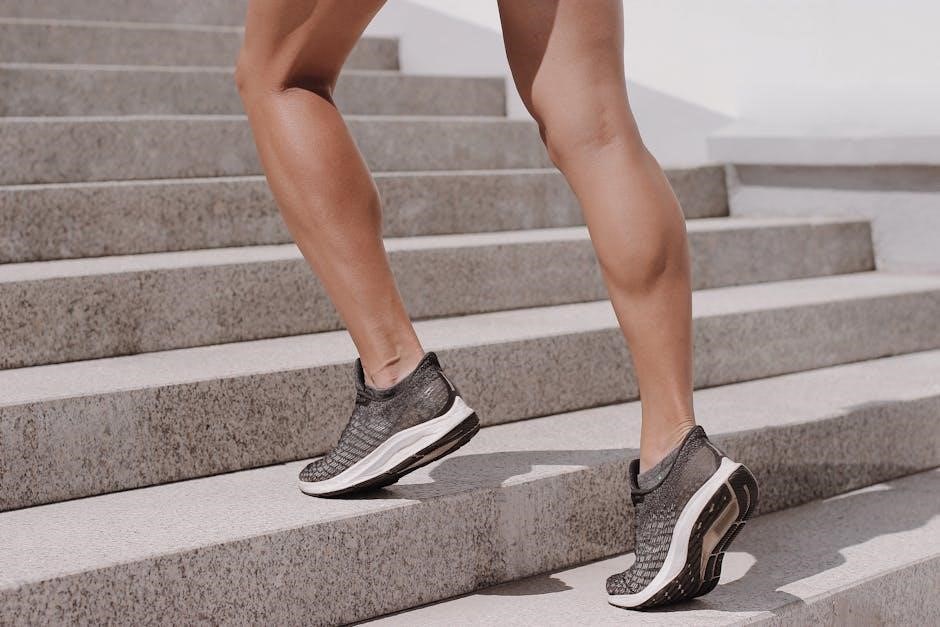
Retrocalcaneal bursitis exercise PDFs frequently incorporate toe raises as a complementary strengthening exercise, often overlooked but vital for balanced lower leg development. Unlike heel raises, toe raises target the anterior tibialis muscle, located on the front of the shin. This muscle helps dorsiflex the foot – lifting the toes upwards.
These PDFs typically recommend performing toe raises while seated or standing, focusing on a slow, controlled movement. Resistance can be added using resistance bands looped around the feet, increasing the challenge as strength improves. The exercise helps to counteract the strengthening focus on the calf muscles, preventing imbalances.
Visual aids, such as those found on platforms like YouTube (July 16, 2018), can demonstrate proper form and technique. Maintaining a stable posture and avoiding jerky movements are key to maximizing effectiveness and minimizing the risk of further irritation. Consistent inclusion in a rehabilitation plan is often advised.
Calf Raises with Resistance Band
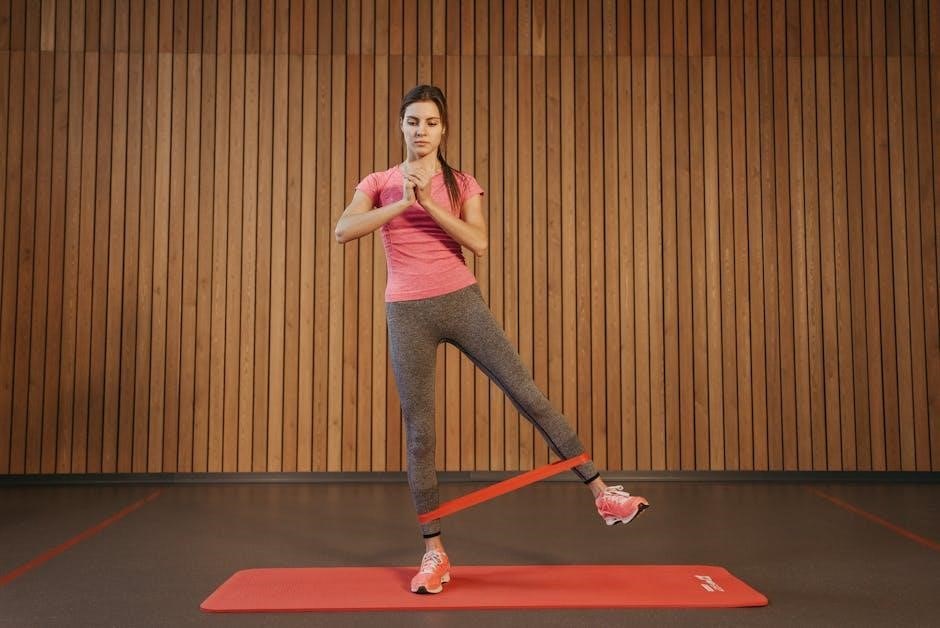
Retrocalcaneal bursitis exercise PDFs often progress from basic calf raises to variations utilizing resistance bands, providing a scalable challenge as pain subsides and strength increases. These PDFs emphasize the importance of controlled movements and proper form to avoid exacerbating the condition. A resistance band placed around the balls of the feet adds load to the gastrocnemius and soleus muscles.
The added resistance forces the muscles to work harder through the full range of motion, enhancing strengthening benefits. PDFs typically detail starting with a light resistance band and gradually increasing it as tolerated. Performing both straight-knee (gastrocnemius focus) and bent-knee (soleus focus) variations is recommended for comprehensive strengthening.
Resources like YouTube (content from July 16, 2018) can visually demonstrate correct technique. Maintaining a neutral spine and avoiding excessive pronation or supination of the foot are crucial. Consistent, progressive overload is key to successful rehabilitation, as outlined in many downloadable guides.
Proprioceptive Exercises
Retrocalcaneal bursitis exercise PDFs highlight the critical role of proprioception – your body’s awareness of its position in space – in preventing re-injury and restoring functional stability. These guides emphasize that addressing proprioceptive deficits is as important as strengthening the surrounding muscles. Exercises aim to retrain the neuromuscular system to control movement and balance effectively.
Common exercises detailed in these PDFs include single-leg stance, often starting with eyes open and progressing to eyes closed for increased difficulty. Balance board exercises are also frequently included, challenging stability in multiple planes of motion. Simple activities like toe curls and picking up marbles with the toes further enhance foot and ankle awareness.
Visual resources, such as those found on platforms like YouTube (as of July 16, 2018), can demonstrate proper form. PDFs stress the importance of performing these exercises slowly and with control, focusing on maintaining balance and avoiding pain. Gradual progression is key to improving proprioceptive abilities safely.
Single Leg Balance
Retrocalcaneal bursitis exercise PDFs consistently feature single-leg balance as a foundational proprioceptive exercise. This drill directly addresses the instability often experienced due to pain and inflammation around the heel. PDFs emphasize starting with a stable surface and minimal challenge, gradually increasing difficulty as tolerated.
Instructions typically detail maintaining a neutral spine, engaged core, and a slight bend in the standing knee. Begin by holding the position for 10-30 seconds, repeating several times on each leg. Progression involves closing the eyes, performing the exercise on an uneven surface (like a foam pad), or adding gentle head movements.
These PDFs often caution against pushing through pain, advising modification or regression if discomfort arises. Resources like YouTube videos (referenced from July 16, 2018) can visually demonstrate correct form and common errors. The goal is to improve the ankle’s ability to react and stabilize, reducing the risk of re-injury during functional activities.
Balance Board Exercises
Retrocalcaneal bursitis exercise PDFs often incorporate balance board work as an advanced proprioceptive challenge. These exercises build upon the foundation established with simpler drills like single-leg balance, demanding greater ankle and foot stability. PDFs typically recommend starting with a wobble board, progressing to rocker or disc boards as strength and control improve.
Instructions emphasize maintaining a soft knee bend, engaged core, and controlled movements. Begin with short durations (10-20 seconds) and gradually increase the time as balance improves. Focus on minimizing excessive ankle motion and avoiding any pain provocation. PDFs frequently advise having a stable surface nearby for support during initial attempts.
Cautionary notes within these PDFs highlight the importance of proper form and gradual progression. Visual resources, such as those found on platforms like YouTube (as of July 16, 2018), can be invaluable for understanding correct technique. The aim is to enhance dynamic stability and prepare the ankle for more demanding activities.
Toe Curls & Marbles Pickup
Retrocalcaneal bursitis exercise PDFs frequently include toe curls and marbles pickup as foundational strengthening and dexterity exercises. These seemingly simple activities target the intrinsic muscles of the foot, crucial for arch support and overall foot mechanics. PDFs detail how to perform toe curls by actively contracting the toes to draw the heel towards the buttocks, focusing on controlled movement.
Marbles pickup involves using the toes to grasp and lift marbles (or similar small objects) from a flat surface into a container. These exercises are typically performed seated, minimizing stress on the heel. PDFs emphasize starting with a small number of repetitions and gradually increasing as strength improves.
Guidance within these PDFs stresses avoiding pain and maintaining proper form. Resources like YouTube videos (dated July 16, 2018, for example) can demonstrate correct technique. The goal is to rebuild foot strength and improve proprioception, contributing to a more stable and functional ankle;
Advanced Exercises (Post-Pain Reduction)
Retrocalcaneal bursitis exercise PDFs outline a progression to advanced exercises only after significant pain reduction is achieved. These build upon foundational strength and stability, preparing the foot and ankle for higher-impact activities. PDFs typically introduce eccentric heel drops, performed by slowly lowering the heel below level, emphasizing controlled descent to strengthen the Achilles tendon and calf muscles.
Low-impact plyometrics, such as gentle box steps or mini-squats, are also included, focusing on shock absorption and reactive strength. These are introduced cautiously, monitoring for any symptom flare-ups. PDFs stress the importance of proper warm-up and cool-down routines.
Resources like YouTube (with content dating back to July 16, 2018) can visually demonstrate correct form. Agility drills, like cone weaving, are gradually incorporated, enhancing coordination and responsiveness. PDFs emphasize listening to the body and modifying exercises as needed, prioritizing a pain-free progression.
Eccentric Heel Drops (Advanced)
Retrocalcaneal bursitis exercise PDFs detail eccentric heel drops as a cornerstone of advanced rehabilitation. These target the Achilles tendon and calf muscles, promoting collagen realignment and strengthening – crucial for long-term recovery. PDFs emphasize performing these only after substantial pain reduction and successful completion of earlier strengthening phases.
The technique involves rising onto the toes (using both legs if needed for assistance) and then slowly lowering the affected heel below the level of the step or platform, controlling the descent over 3-5 seconds. PDFs often recommend starting with a small range of motion and gradually increasing it as tolerated.
Resources like YouTube (content available since July 16, 2018) can visually demonstrate proper form. PDFs caution against any pain during the exercise and advise modifying the range of motion or reducing repetitions if discomfort arises. Consistent, controlled execution is key to maximizing benefits and preventing re-injury.
Plyometric Exercises (Low Impact)
Retrocalcaneal bursitis exercise PDFs introduce low-impact plyometrics as a later-stage rehabilitation component. These exercises bridge the gap between controlled strengthening and the demands of functional activities, enhancing power and reactivity in the calf and Achilles tendon. However, PDFs strongly emphasize that these are only appropriate after significant pain reduction and successful completion of eccentric strengthening.
Examples detailed in PDFs include gentle box steps (focusing on controlled descent), mini-squat jumps, and forward hops – all performed with minimal impact. The key is to prioritize quality of movement over height or speed. YouTube resources (available since July 16, 2018) can demonstrate proper technique.
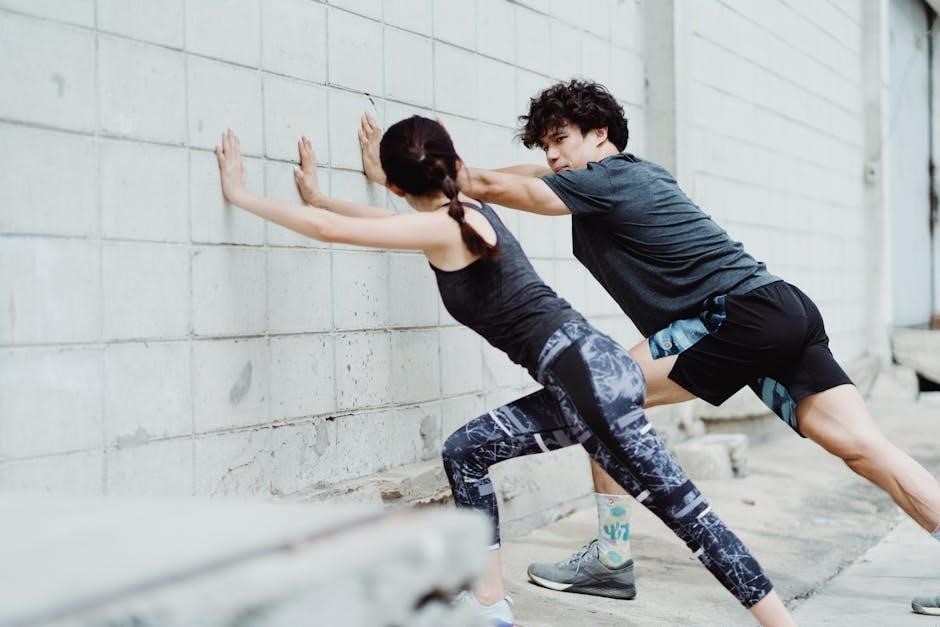
PDFs caution against any sharp pain and advise starting with a low volume (e.g., 2-3 sets of 5-10 repetitions). Gradual progression, based on individual tolerance, is crucial to avoid exacerbating the condition. Proper warm-up and cool-down are also essential components.
Retrocalcaneal bursitis exercise PDFs outline a cautious approach to agility drills, positioning them as the final phase of rehabilitation. These drills aim to restore the ability to change direction quickly and efficiently, mimicking the demands of daily life or sports. PDFs consistently stress that these should only be initiated after achieving pain-free completion of plyometric exercises and demonstrating adequate strength and proprioception.
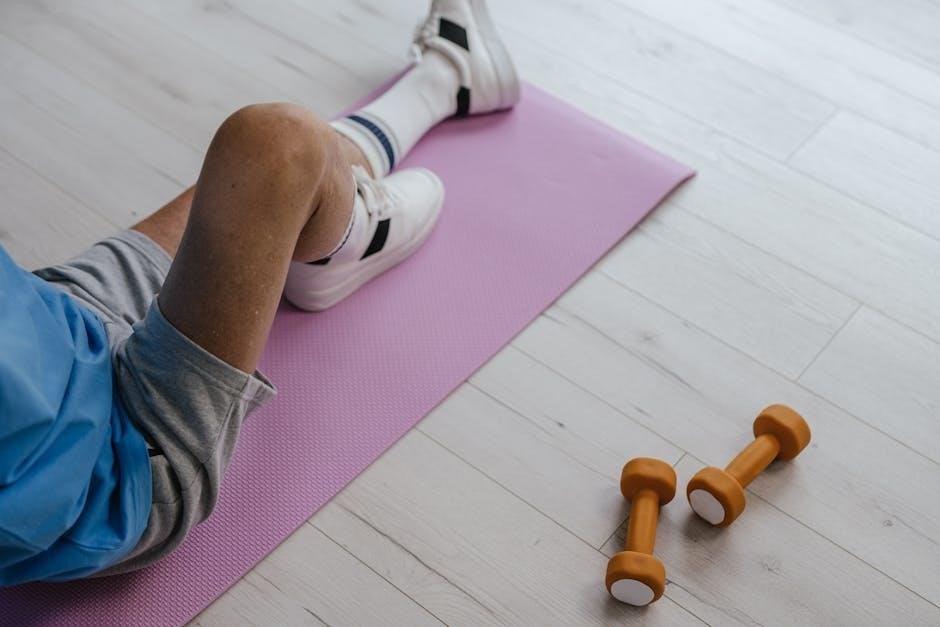
Common drills detailed in PDFs include cone drills (shuttle runs, figure-eights), lateral shuffles, and carioca movements. The emphasis is on controlled movements, avoiding sudden stops or pivots that could stress the Achilles tendon and bursa. YouTube videos (like those available since July 16, 2018) can provide visual guidance on correct form.
PDFs recommend starting with low intensity and short distances, gradually increasing both as tolerated. Monitoring for any recurrence of pain is paramount, and immediate modification or cessation of the drill is advised if discomfort arises.
Preventative Measures & Long-Term Management
Retrocalcaneal bursitis exercise PDFs highlight that consistent preventative strategies are crucial for long-term management, aiming to minimize recurrence. These PDFs emphasize the importance of maintaining flexibility in the calf muscles and Achilles tendon through regular stretching, as outlined in earlier sections. Proper footwear selection is consistently stressed, advocating for shoes with good heel cushioning and support.

Many PDFs recommend considering orthotics or heel lifts to reduce stress on the retrocalcaneal bursa, particularly during activities that aggravate symptoms. Activity modification remains key, advising a gradual return to sport or strenuous activity, avoiding sudden increases in intensity or duration. YouTube resources (available since July 16, 2018) can demonstrate proper exercise technique.
PDFs also suggest incorporating proprioceptive exercises into a long-term maintenance program to enhance joint stability and reduce the risk of re-injury. Regular self-assessment for early signs of inflammation is also encouraged.
Proper Footwear Selection
Retrocalcaneal bursitis exercise PDFs consistently emphasize the critical role of proper footwear in both preventing and managing the condition. These guides detail that shoes should provide adequate cushioning, particularly in the heel, to absorb impact and reduce stress on the retrocalcaneal bursa. A firm heel counter is also recommended to stabilize the foot and prevent excessive pronation or supination.
PDFs often advise avoiding shoes with excessively high heels or those that are too flat, as both can exacerbate the condition. The importance of a good fit is highlighted, ensuring sufficient space in the toe box and avoiding shoes that rub or irritate the heel. YouTube videos (like those available since July 16, 2018) can demonstrate how to assess shoe fit.
Many PDFs suggest consulting with a podiatrist or running shoe specialist to determine the most appropriate footwear based on individual foot type and activity level. Regularly replacing worn-out shoes is also crucial to maintain adequate cushioning and support.
Orthotics and Heel Lifts
Retrocalcaneal bursitis exercise PDFs frequently detail the benefits of orthotics and heel lifts as adjunctive treatments. Custom or over-the-counter orthotics can help correct biomechanical imbalances, such as overpronation, that contribute to bursa irritation. These PDFs explain how orthotics provide arch support and redistribute pressure, reducing stress on the heel.
Heel lifts, often recommended in conjunction with orthotics, elevate the heel slightly, decreasing tension on the Achilles tendon and lessening compression of the retrocalcaneal bursa. PDFs illustrate how even a small lift can significantly reduce pain during activity. YouTube resources (available since July 16, 2018) can visually demonstrate proper orthotic and heel lift placement.
These guides emphasize that orthotics and heel lifts should be used as part of a comprehensive treatment plan, alongside exercise and other conservative measures. A podiatrist’s assessment is crucial to determine the appropriate type and height of lift needed for individual needs.
Activity Modification & Gradual Return to Sport
Retrocalcaneal bursitis exercise PDFs consistently highlight the importance of activity modification during recovery. Initially, reducing or temporarily avoiding activities that aggravate the pain – like running or jumping – is crucial. PDFs detail a phased approach to returning to sport, emphasizing a gradual increase in intensity and duration.
These guides often include a timeline, suggesting starting with low-impact activities like walking or cycling, and progressively reintroducing more demanding exercises as pain subsides. YouTube videos (dating back to July 16, 2018) can demonstrate proper form for modified exercises. The key principle is to avoid re-injury by listening to your body and not pushing through pain.
PDFs stress the need for a structured rehabilitation program, incorporating the exercises outlined within, to rebuild strength and endurance. A premature return to full activity can easily lead to a recurrence of bursitis, hindering long-term recovery.